/01.
Overview
Stake had already made property investing more accessible through fractional ownership. StakeOne was a new proposition: giving customers a way to buy and own an entire property.
I helped shape StakeOne from its earliest concepts through to its private pre-launch, working across the product vision, purchasing experience and visual identity.
/02.
From an idea to a product
StakeOne was already on the roadmap when I became involved. Our Head of Product asked me to explore what the experience could look like, initially to help communicate the vision internally and to investors.
There wasn’t a detailed brief yet, so I started by exploring how customers might discover developments, understand their options and reserve a property through the app.
Once the project received approval, my existing squad transitioned into a dedicated StakeOne team. I continued as the product designer, working alongside our PM, engineers and teams across Real Estate, Operations and Finance.
/03.
Rethinking the property buying journey
Unlike Stake’s fractional product, where customers could buy shares in multiple properties, StakeOne needed a more direct purchasing experience.
I explored different approaches to project discovery, unit selection, investment information and payment breakdowns.
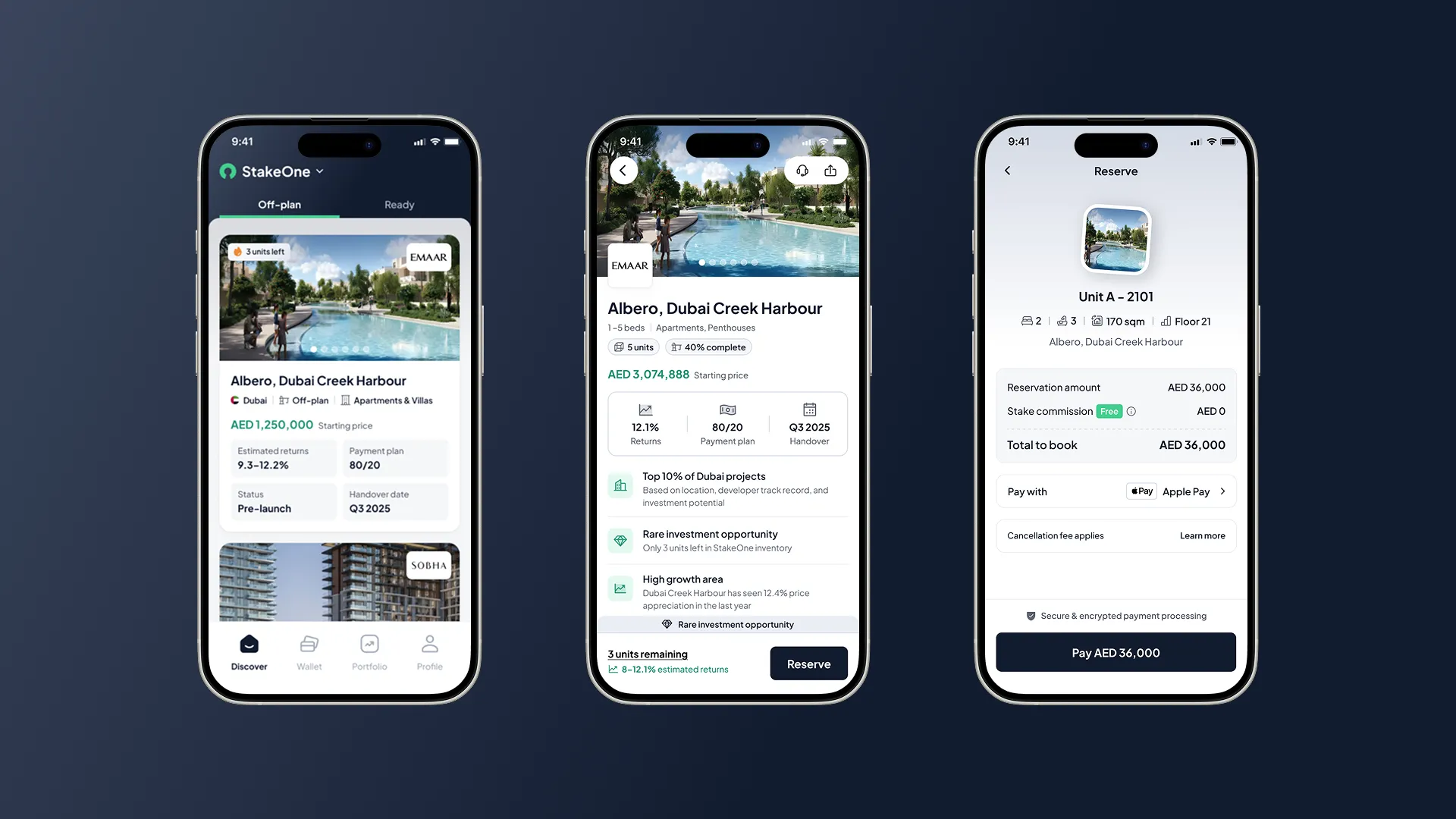
One of the biggest challenges was helping customers understand the financial commitment before reserving a property.
We needed to explain what they were paying upfront, what would be due later and how the allocation process worked, particularly for off-plan developments where an exact unit might not yet be confirmed.
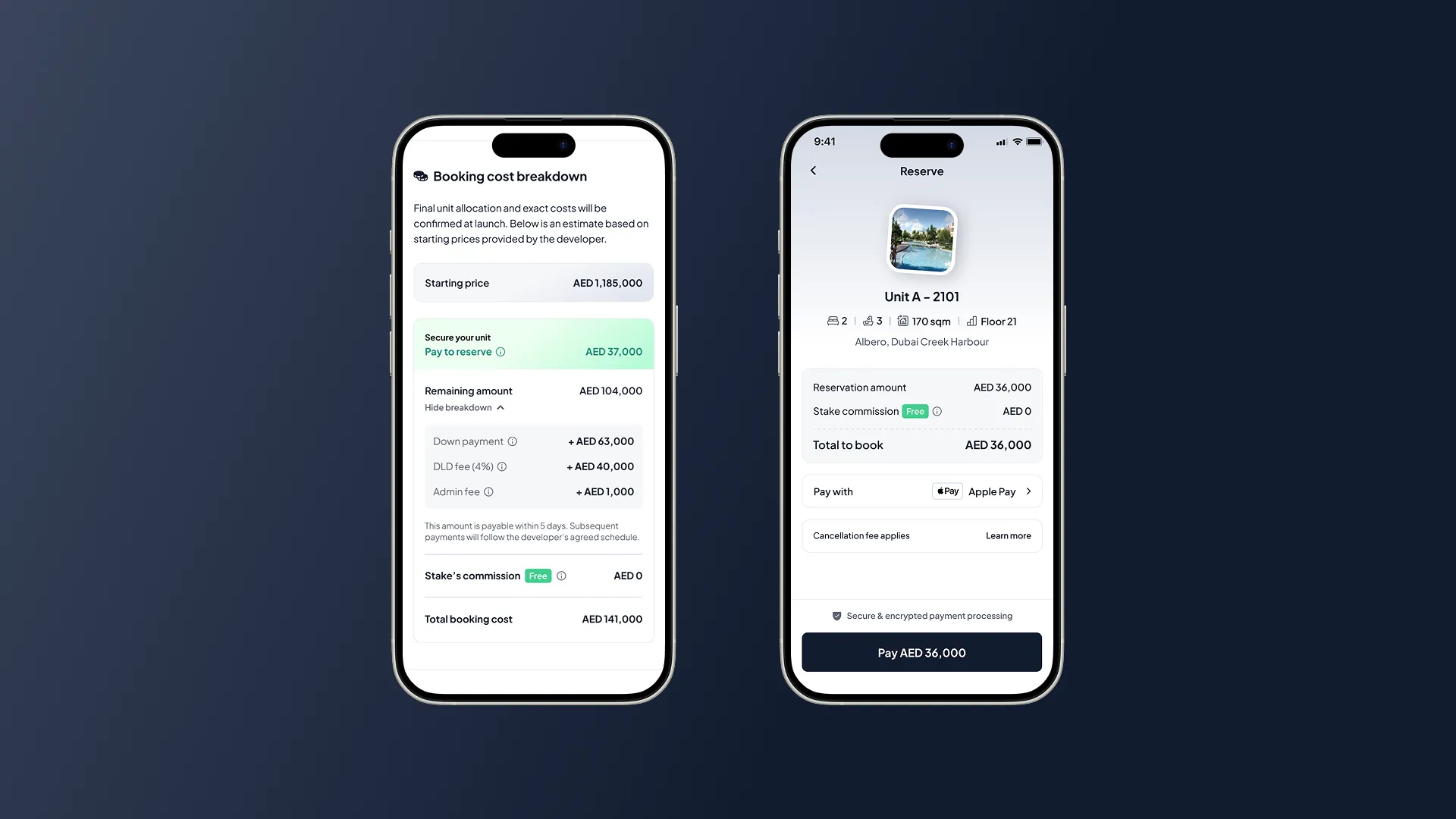
Through design explorations and reviews with Product and Engineering, we refined the experience around what we could realistically deliver for the MVP.
/04.
Connecting the digital and operational experience
The reservation journey was more than a checkout flow.
Customers needed to complete identity verification, pay a reservation amount and wait for the StakeOne team to confirm availability and manage the allocation.
While parts of that process remained manual for the MVP, the app needed to give customers confidence about what was happening.
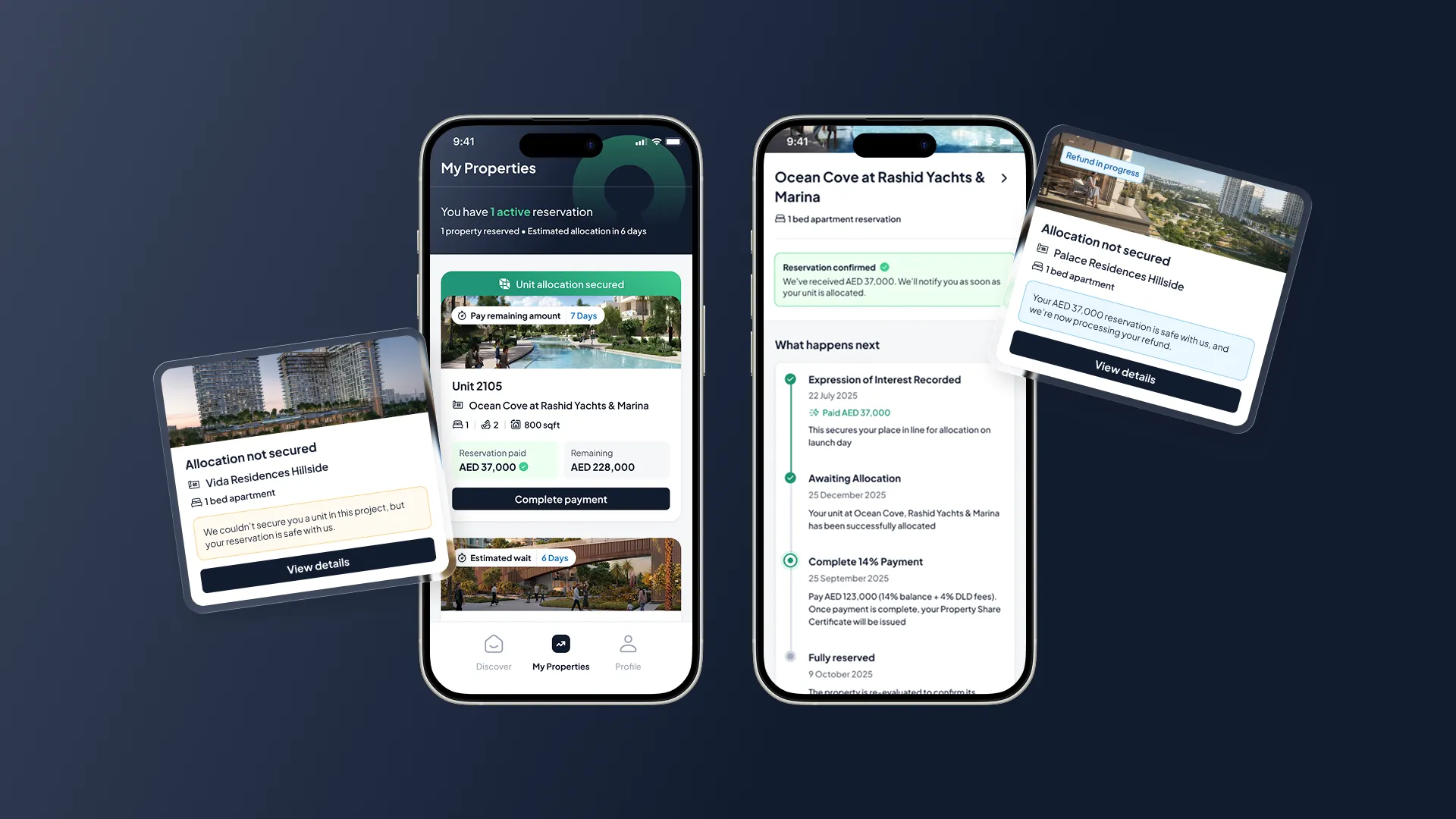
I designed the reservation and post-purchase experiences, including confirmation, progress tracking, allocation outcomes and refunds.
From Portfolio to My Properties
I also proposed My Properties as a more appropriate experience than a traditional investment portfolio.
Rather than focusing on performance metrics, customers needed to see their reserved properties, follow their status and understand what happened next.
The name and experience were adopted in the product.
/05.
Exploring opportunities beyond the MVP
Alongside the core experience, I explored ways to help customers make more informed investment decisions.
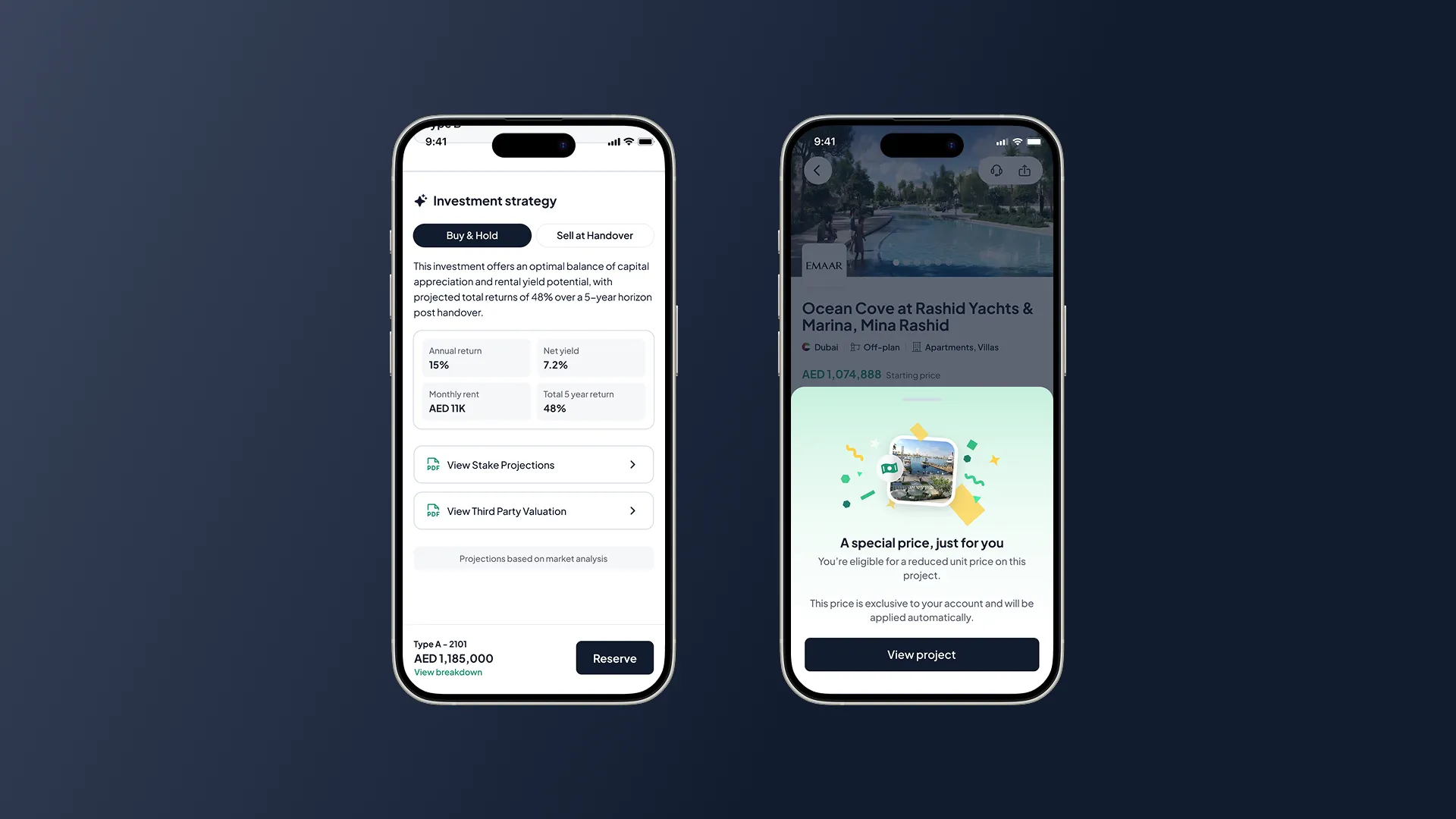
One concept introduced investment strategies, comparing approaches such as buying to rent and selling at handover.
We held it back from the MVP because we needed more input from Compliance, Finance and Operations. After launch, similar requests came from customers and the Real Estate team, so I revisited and refined the concept with our PM.
I also worked on personalised pricing, exploring how exclusive offers could encourage reservations while making the value and updated costs clear throughout the purchasing journey.
/06.
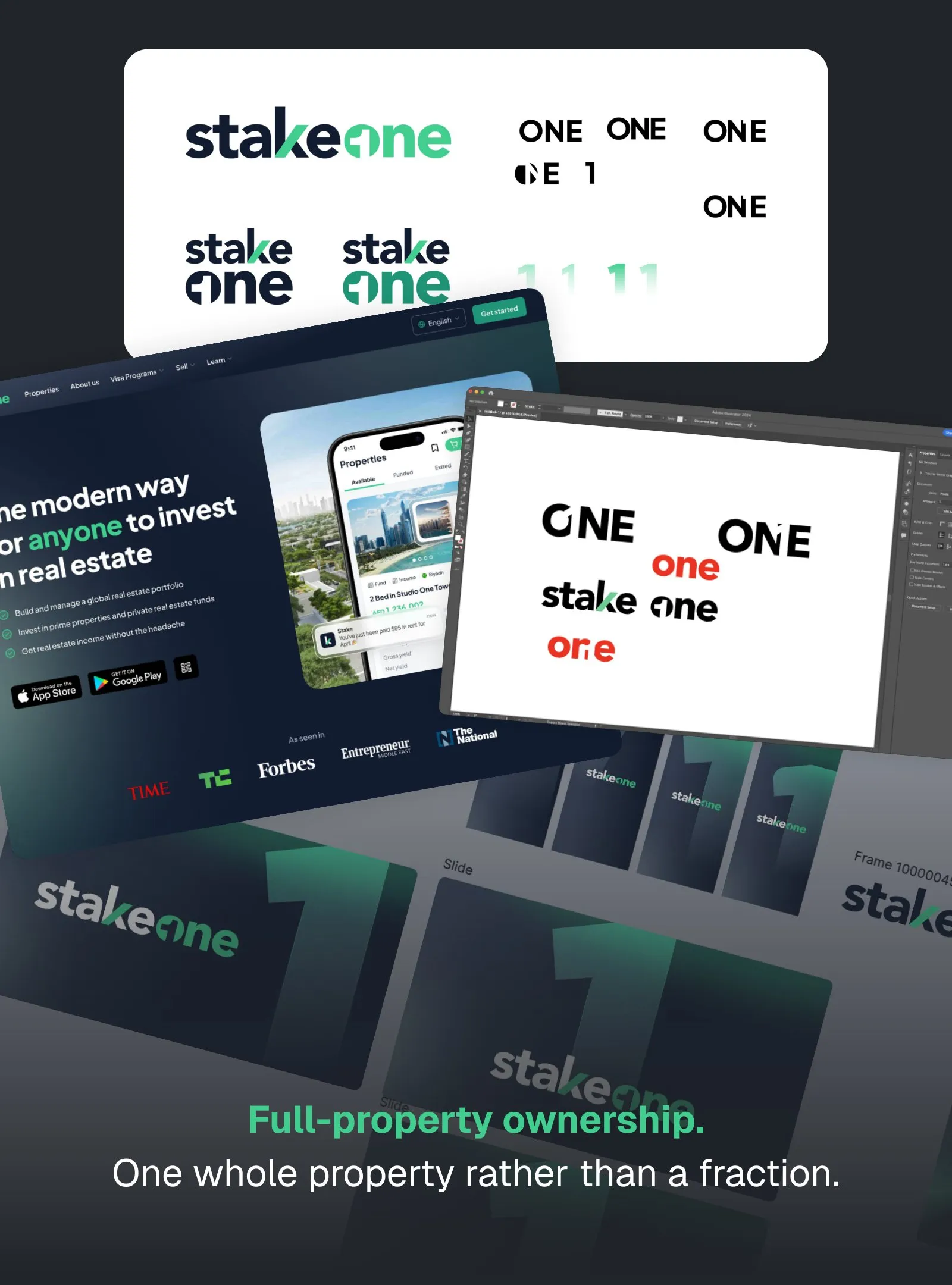
Giving StakeOne its own identity
I initially used Stake’s existing design system to move quickly through the early concepts.
As the product evolved, I explored a more premium visual direction to reflect the full-property ownership proposition while maintaining a connection to the parent brand.
The direction was well received, and an external designer later refined the logo.
Read more: StakeOne brand identity case study
/07.
From early concepts to launch
StakeOne reached its private pre-launch in the UAE in October 2025.
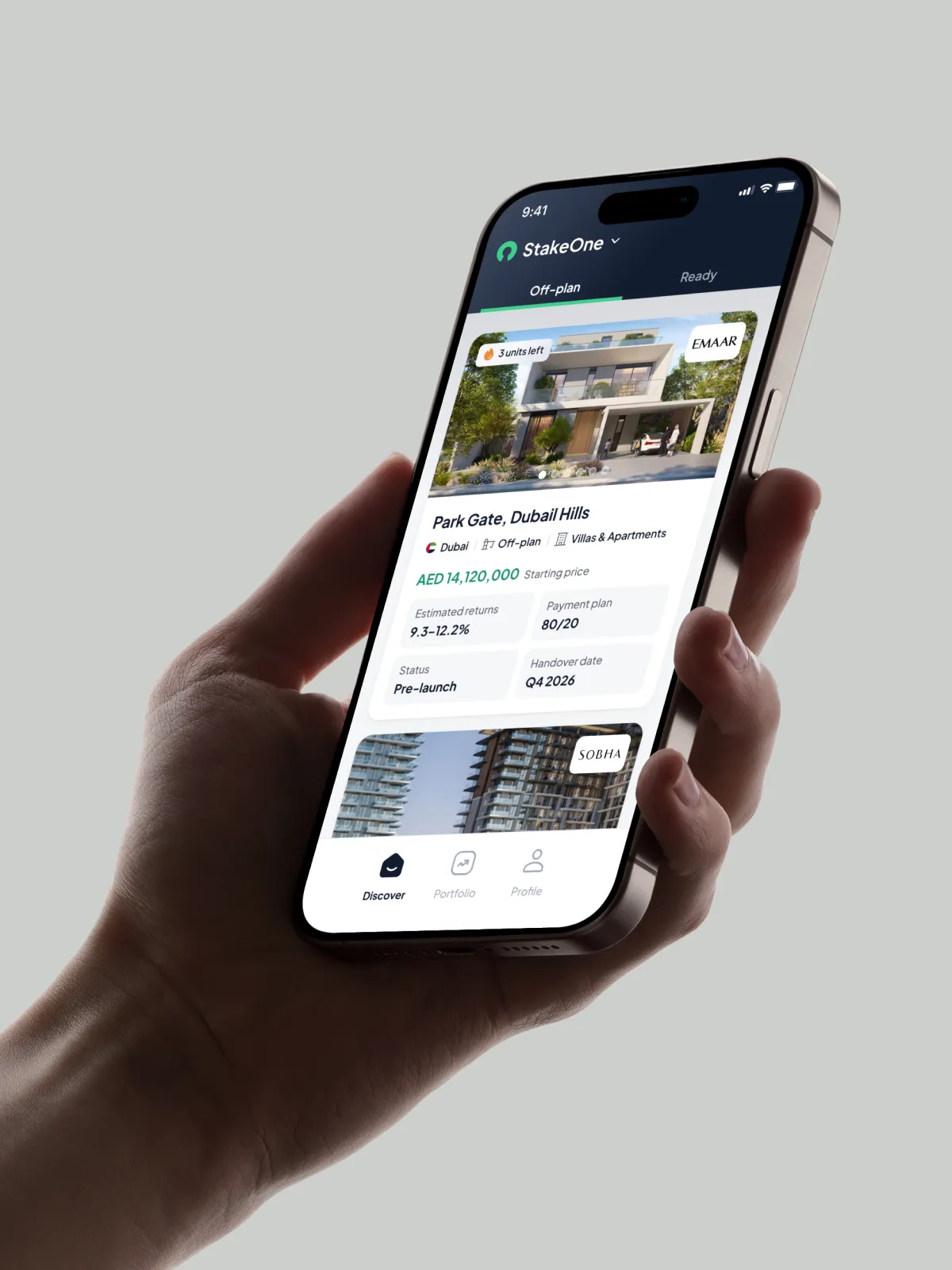
What began as exploratory concepts became a working product where customers could discover developments, reserve properties and track their progress towards allocation.
Not everything was automated, and we deliberately left some ideas for later. But we’d established the foundations of a new product and continued improving it after launch.
For me, the most valuable part was working across the entire journey, from helping communicate the initial vision to designing around real operational and technical constraints.
It reinforced something I’ve learnt throughout my career: good product design isn’t just about simplifying what customers see. It’s also about understanding everything that needs to happen behind the scenes to make the experience work.